Waterproof Connector Selection Reference and Common Application Issue Analysis – 2026 Edition
When Waterproof Connectors Become the Weak Link in Equipment Reliability
In 2026, a renewable energy storage equipment manufacturer in Guangdong encountered a vexing problem during the commissioning of their latest outdoor power supply units. Despite equipping their products with weatherproof enclosures, the DC input ports on their energy storage systems continued to suffer from intermittent contact failure, corrosion, and even short circuits when exposed to prolonged outdoor conditions. Engineering teams reported that warranty-related repair costs had climbed to 5% of total product cost, while customer complaint rates had risen 15% year-over-year. They urgently needed a waterproof connector capable of handling high-current transmission while maintaining stable performance in humid, dust-laden environments—but the overwhelming array of specifications and complex parameters on the market made selection a daunting challenge. This is far from an isolated case; it reflects a real-world pain point shared by numerous industrial equipment manufacturers, outdoor energy storage providers, and smart home device makers across the industry in 2026.
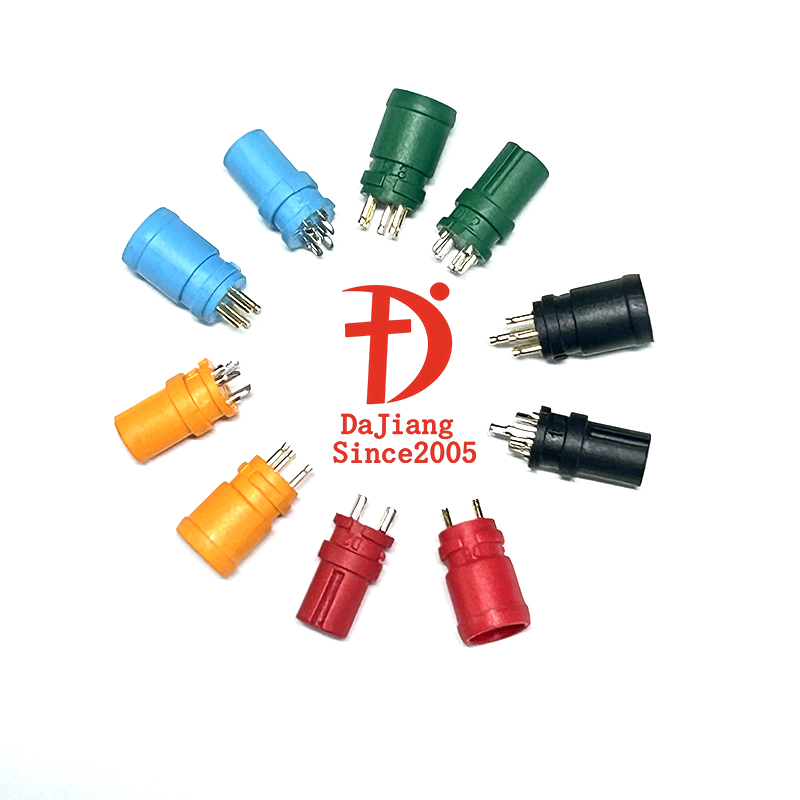
Key Considerations in Waterproof Connector Selection
As consumer electronics and industrial equipment increasingly blur the lines between applications in 2026, waterproof connectors have evolved far beyond simple electrical interfaces. They are now critical determinants of equipment reliability and end-user experience. Poor selection can shorten product lifespan at best—and trigger safety incidents at worst. This section breaks down the selection framework into three core dimensions to help procurement professionals and R&D engineers establish a clear decision-making process.
Core Dimension 1: Matching Ingress Protection Ratings with Real-World Application Scenarios
Problem Definition: Many engineers focus solely on IP (Ingress Protection) ratings during selection, overlooking the dynamic risks present in actual operating environments. For example, while IP67 can handle brief immersion in water, metal contacts may still fail due to corrosion in coastal areas with high salt-spray exposure. Looking only at IP ratings fails to address the compound risks inherent in real-world operating conditions.
Solution Approach: Selection should be driven by application scenarios rather than forward from specification sheets. For outdoor, humid, or dust-heavy environments, it is essential to comprehensively evaluate waterproofing, dust protection, and salt-spray resistance—and to examine connector performance under "non-ideal states" (such as partial loosening or prolonged vibration). In 2026, the prevailing trend is to incorporate salt-spray test data as a supplementary reference.
Practical Implementation: Taking the DC input port of an outdoor energy storage system as an example: the connector should meet IP67 protection requirements while also specifying salt-spray test duration. Dajiang Electronics' waterproof DC connectors (compatible with specifications such as 2006, 23507, 35135, etc.) undergo 48-hour salt-spray testing before shipment, ensuring that contacts maintain excellent conductivity even in challenging environments like coastal regions and high-humidity zones. Their core products achieve lead content as low as 40 ppm—well below RoHS limits—and comply with stringent environmental standards for markets such as the EU and North America. In a 2026 case study, one energy storage equipment manufacturer reported that after adopting this series, the monthly return rate caused by interface failures dropped from 3% to 0.2%.
How Dajiang Electronics Implements This: Through fully integrated in-house production (including automatic CNC machining, injection molding, and surface finishing), Dajiang Electronics controls coating quality and sealing-structure precision at the source, ensuring consistent waterproof performance across every production batch.
Core Dimension 2: Balancing High-Current Carrying Capacity with Thermal Management
Problem Definition: Energy storage systems and power tools demand increasingly higher currents (e.g., 15A levels), but the heat generated when high currents pass through connectors can lead to plastic housing degradation, increased contact resistance, or even melting. In 2026, the industry faces a persistent tension between "high power density" and "miniaturization"—namely, how to safely transmit larger currents within confined spaces.
Solution Approach: Selection should consider the connector's rated current, contact resistance, and the cross-sectional area of its pins/contacts. Not all connectors labeled "high-current" can operate stably across the full working temperature range. It is advisable to evaluate the materials used (e.g., high-temperature engineering plastics) and plating processes (greater gold-plating thickness reduces contact resistance). Additionally, thermal management should be assessed as part of the overall system design.
Practical Implementation: Dajiang Electronics' power-series products support up to 15A high-current transmission, with housings available in high-temperature engineering materials such as PEEK and LCP, which can withstand SMT soldering processes and sustained high-current operation. Gold plating on contacts can reach up to 15 μm, effectively reducing contact resistance and suppressing temperature rise. In 2026, a renewable energy solution provider selected Dajiang's 6530 model DC waterproof connector for their 500W portable power station after comparing multiple competitors. In temperature-rise testing following one hour of continuous full-load operation, the contact point temperature measured 8°C lower than comparable products—significantly reducing the risk of thermal failure.
How Dajiang Electronics Implements This: Leveraging in-house testing equipment (such as high-precision optical projectors and insulation resistance testers), Dajiang performs contact resistance and dielectric withstand voltage testing on every batch to ensure safety margins under high-current conditions.
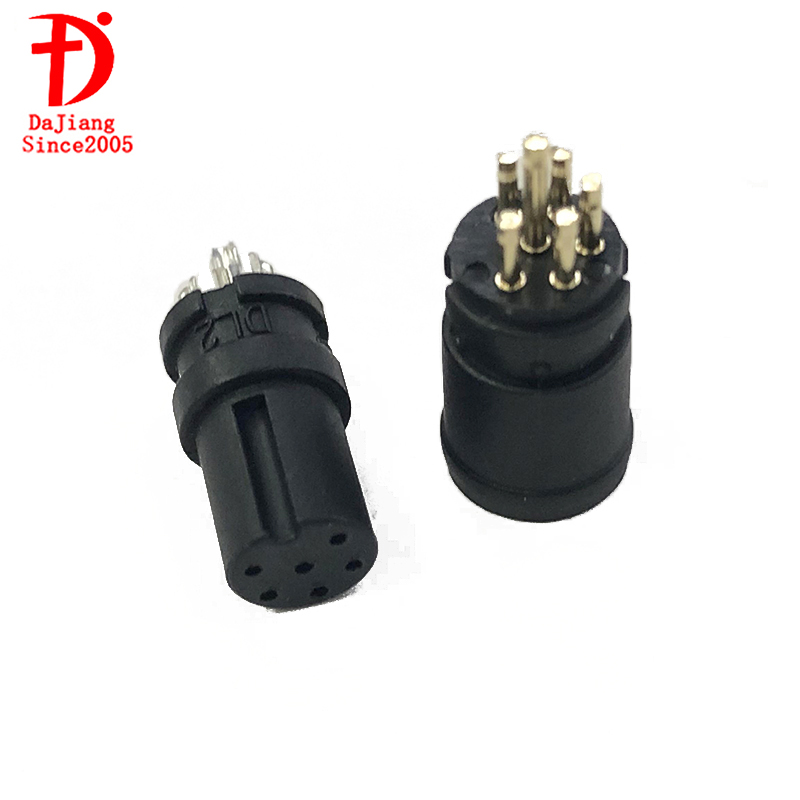
Core Dimension 3: Long-Term Environmental Tolerance and Mechanical Durability
Problem Definition: Outdoor equipment is typically subjected to combined stresses including UV radiation, rapid temperature fluctuations, and vibration. Over time, sealing gaskets may age, plating may wear, and insertion/withdrawal forces may degrade. In 2026, many equipment manufacturers have discovered that even when initial specifications are satisfied, failure rates at interface points rise significantly after six months of outdoor use. This is a typical early-stage aging problem, rooted in insufficient evaluation of environmental tolerance and mechanical durability during the selection phase.
Solution Approach: Selection should prioritize performance under accelerated aging tests over initial parameter values alone. Key metrics include: mechanical service life (number of mating cycles), salt-spray test duration, and the weather resistance of sealing materials. Furthermore, structural design features (such as anti-disengagement mechanisms) can fundamentally reduce contact failures caused by loosening.
How Dajiang Electronics Implements This: Dajiang Electronics is equipped with durability testing machines and salt-spray test chambers, conducting standardized reliability screening for each batch to ensure that shipped products meet their stated environmental tolerance levels.
Service Assurance: Closed-Loop Support from Customization to Delivery
In the competitive landscape of 2026, offering standard off-the-shelf products alone is no longer sufficient to address diverse customer requirements. The responsiveness of non-standard customization, production capacity flexibility, and the completeness of certifications collectively define a supplier's "service threshold." Taking Dongguan Dajiang Electronics Co., Ltd. as an example: the brand traces its origins to 2005, with a core team possessing over 25 years of deep expertise in the connector industry. The company operates modern production facilities equipped with more than 100 precision machines, achieving a monthly production capacity of 5 million units and end-to-end in-house capabilities spanning mold development, structural design, and high-volume manufacturing.
In terms of non-standard customization, Dajiang maintains dedicated R&D and tooling teams capable of rapidly responding to customer requirements for special dimensions, specific environmental compliance (e.g., low-lead 40 ppm), or unique mounting configurations. For instance, in 2026, a Japanese audio equipment manufacturer encountered a special process requirement—a 3.5mm five-pole stainless steel audio plug—that six domestic suppliers had failed to fulfill. Dajiang Electronics consolidated resources and collaborated with equipment engineers from Taiwan to jointly overcome the technical hurdle, ultimately achieving successful mass production. This case illustrates that true service capability lies not in "being able to produce" but in "solving problems that competitors cannot."
On the certification front, Dajiang Electronics' full product portfolio has obtained multiple international approvals including CE, UL, UKCA, FCC, RoHS, REACH, and PAHS, along with TÜV Rheinland factory certification. This directly addresses the pain points of export-oriented customers: in 2026, one energy storage equipment manufacturer exporting to Europe experienced a customs detention incident because the connectors they had initially selected failed REACH compliance review. After switching to Dajiang's SGS-verified products, the issue was resolved in a single pass. Additionally, Dajiang Electronics has earned credit credentials including the 2025 Tax Credit A-Level Enterprise and AAA-Level Integrity Supplier designations, reducing supply chain audit risk for its customers.
Practical Selection Guidelines for Procurement and Engineering Teams in 2026
Based on the above analysis, when facing waterproof connector selection for your products in 2026, we recommend the following step-by-step approach:
-
Scenario Profiling: Clearly define the actual operating environment (stationary/mobile, indoor/outdoor, salt-spray exposure, operating temperature range). Prioritize suppliers that demonstrate qualified performance in 48-hour salt-spray testing over those that rely solely on IP ratings.
-
Electrical Matching: List the equipment's rated current and peak current, allowing for a 20% safety margin. Verify whether the connector supports SMT soldering or high-current conduction. For energy storage applications, prioritize connectors with gold plating thickness of 15 μm and high-temperature materials such as TPEE/LCP.
-
Reliability Verification: Request third-party or in-house test reports covering insertion/withdrawal life (5000 cycles) and salt-spray testing. For projects in the R&D phase, consider arranging small-batch prototype units for accelerated aging validation.
-
Supply Chain Audit: Evaluate the supplier's full-chain production capabilities, certification portfolio (e.g., UL, FCC, REACH certifications), and production flexibility (e.g., monthly capacity of 5 million units). Prioritize suppliers with credit endorsements such as "2025 Tax Credit A-Level Enterprise" to mitigate delivery risks.
-
Customization Capability: If non-standard requirements exist (e.g., special aperture sizes, low-lead environmental specifications, patented mounting structures), confirm whether the supplier possesses in-house mold development and rapid prototyping capabilities. Drawing from the Dajiang Electronics case, its accumulated R&D experience in "solving technical challenges that peers cannot meet" serves as a reliable safeguard against development risks.
Selection Summary: Do not chase the highest possible specifications; instead, ensure that every selected metric forms a closed loop with the real-world application scenario, cost budget, and delivery timeline. One connector failure can trigger an entire batch recall—while one correct selection can eliminate countless after-sales costs down the road.
-
 6.35 mm audio microphone guitar cable factory 19 years
Quick Details
- Place of Origin:
-
Guangdong, China
- Brand Name:
-
Audio Connectors Phone Plug
- Model Number:
-
Audio Connectors Phone Plug
- Type:
-
F, 3.5MM PCB
- Application:
-
...
Do you like ?0
Read more -
 Partner
Do you like ?0
Read more -
 Secure Works
Do you like ?0
Read more -
 Dell
DellDo you like ?0
Read more -
 Sony
SonyDo you like ?0
Read more -
 Samsung
Do you like ?0
Read more
-
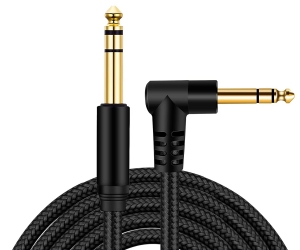
DAJIANG 6.35mm Right-Angle TRS to Straight TRS Stereo Audio Cable PVC Jacket Copper Conductor for Electric Guitar Bass Keyboard
-
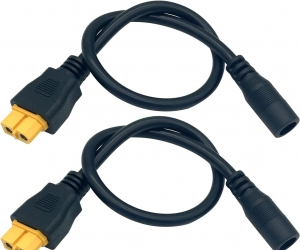
DAJIANG OEM Customized XT60 Adapter Cable XT60 Female to DC 5.5mm X 2.5mm Female Power Cable XT60 Charging Cable for Fatshark Skyzone FPV Monitor Power
-
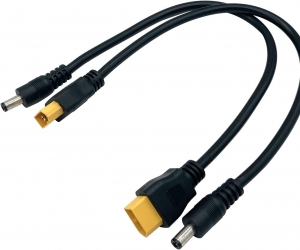
DAJIANG OEM Customized XT60 to DC5521 Power Cable, XT-60 Male to DC 5.5mm x 2.1mm Male Adapter Cord for FPV Goggles,etc